The Lake
Water levels, the dam, and what actually moves the lake
Tillery behaves like a wide river held at a working elevation. Knowing how the pool moves is the difference between a dock that works in August and one that doesn't.
Baseline
Full pond and normal operating range
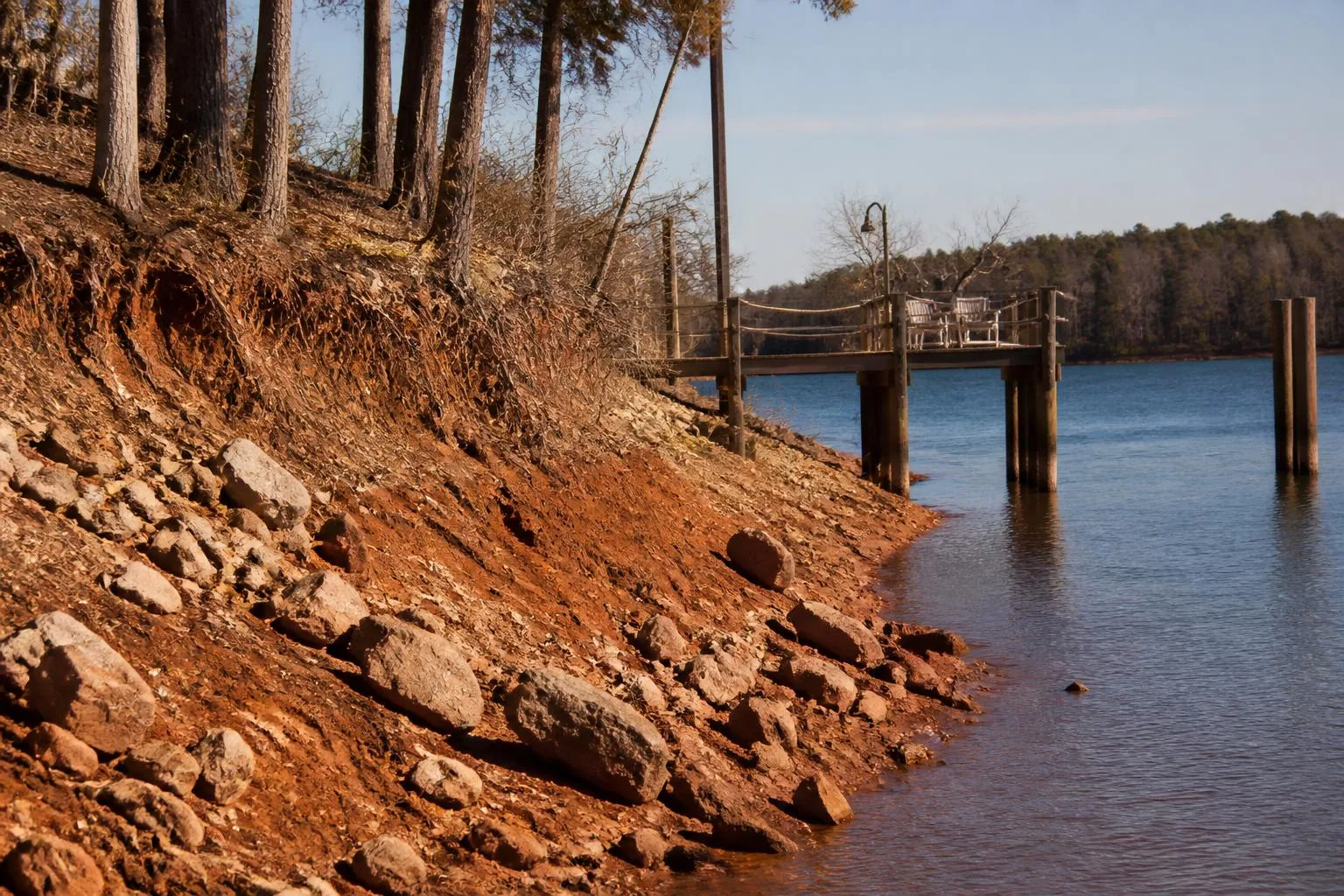
Lake Tillery's full pond sits near 278 feet above sea level. Duke Energy operates the reservoir within a normal band around that figure, and for most of the recreational season the lake stays close to it. Because Tillery is a run-of-river project rather than a deep storage reservoir, seasonal drawdown is far less pronounced than on lakes designed to hold water back.
What that means practically: the lake rarely disappears from under a dock the way storage reservoirs can, but it also moves in short, sharp increments after upstream rainfall or generation changes. Owners describe it as 'a foot here, a foot there' rather than the long slow decline seen elsewhere.
- Full pond near 278 feet above sea level
- Run-of-river operation, limited seasonal drawdown
- Short-term movement tied to upstream releases
- Downstream flow continues to Blewett Falls
Buying
How level behavior should shape a waterfront purchase
The single most common regret among first-time lake buyers anywhere is buying water depth on a good day. Tour a Lake Tillery waterfront lot with a specific question in mind: at a pool elevation a foot or two below full, is there still water under the end of the dock, and can a boat leave the slip without dragging?
Shallow coves and upper-lake frontage are not automatically a problem — plenty of owners are perfectly happy with a fishing boat and a floating dock. But if the plan involves a wake boat or a pontoon with a deeper drive, depth needs to be verified rather than assumed. A local agent who works this lake specifically will know which coves silt in and which hold water.
Practical
Checking conditions before you go
Duke Energy publishes reservoir information for its lakes, including Tillery, and it is the authoritative source for current elevation. Before a trip that involves shallow-water launching, tubing in a specific cove, or moving a boat to a new slip, check the current level rather than relying on last month's experience.
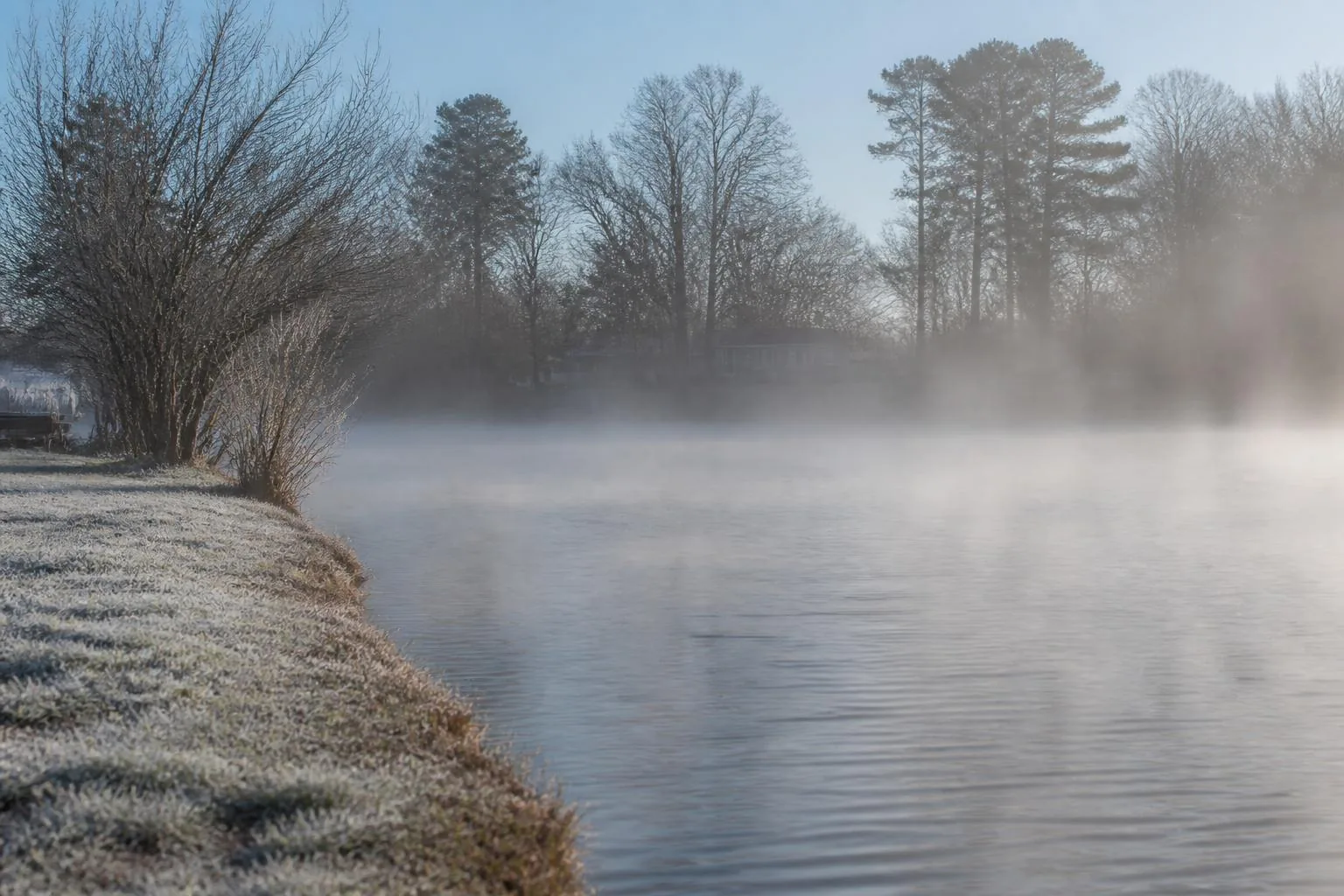
After large rain events in the upper Yadkin watershed, expect debris on the water for several days. Floating logs are the most common cause of prop damage on this lake, and they concentrate along wind-driven shorelines and above the causeway.
Questions
Frequently asked
What is full pond on Lake Tillery?
Full pond is approximately 278 feet above sea level. Duke Energy operates the reservoir near that elevation for most of the year.
Does Lake Tillery get drawn down in winter?
Not dramatically. As a run-of-river reservoir, Tillery does not undergo the deep seasonal drawdowns common on storage lakes, though the level does fluctuate with rainfall and generation.
Where can I check the current Lake Tillery level?
Duke Energy's lake services site publishes reservoir data for the Yadkin–Pee Dee lakes, including Tillery. It is the authoritative source for current elevation.
Sources & references