Market
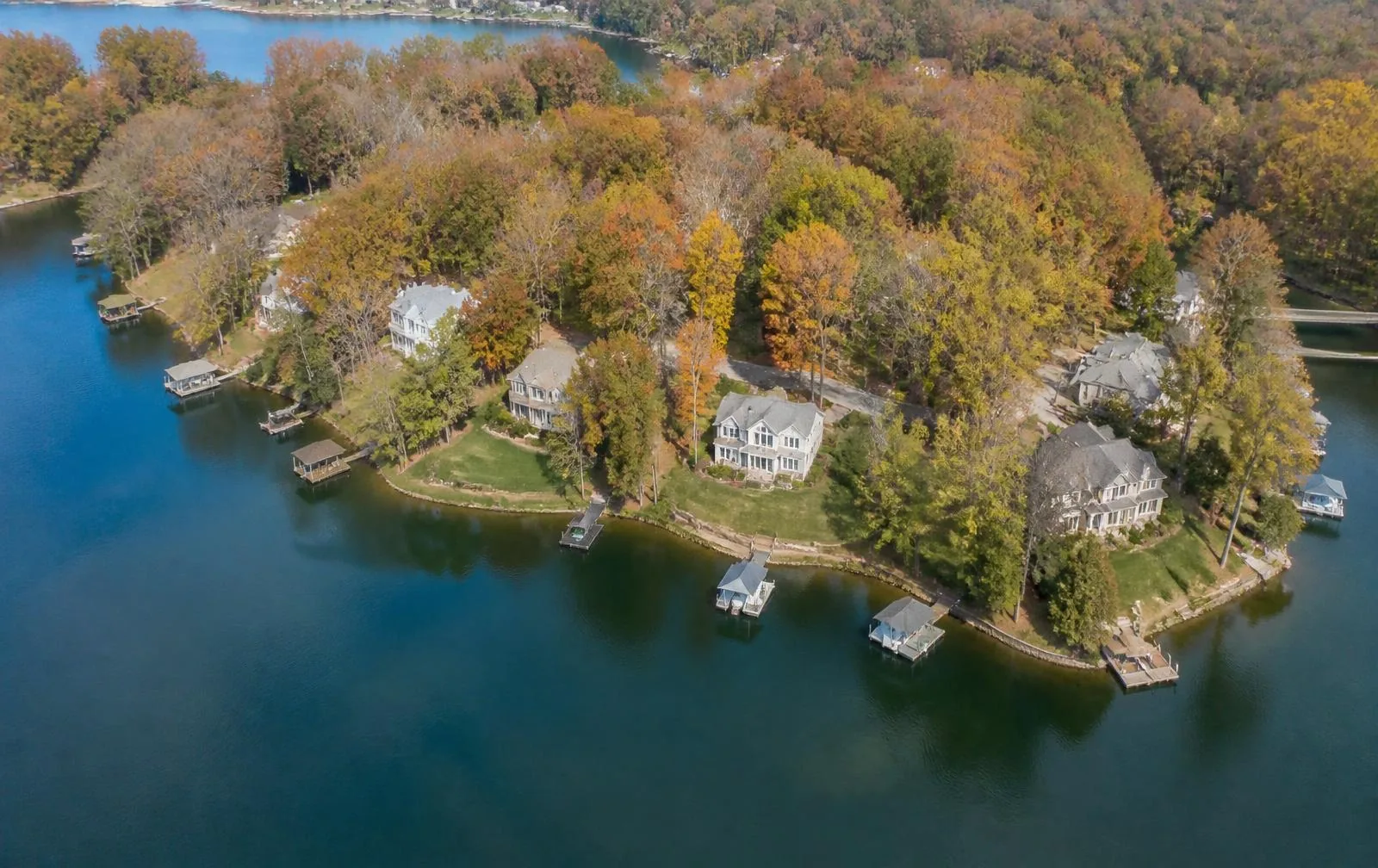
Lake Tillery home values
No invented averages. This page explains how value is actually segmented on Lake Tillery, which attributes move price the most, and exactly what data to ask for before you rely on a number.
- That price separately
- 6 segments
- Separate tax records
- 2 counties
- Largest single lever
- Dock permit
- Where depth is judged
- Low pool
The core problem
Why one average price tells you nothing
Lake Tillery's shoreline is short enough that any given month may produce only a handful of true waterfront closings. Blend those with water-access houses and off-water acreage and the resulting average moves for reasons that have nothing to do with your property.
The fix is segmentation. Compare like to like — same water depth class, same dock status, same county, same construction era — and disclose how many sales the number came from. A median built on four closings is a data point, not a market.
Segments
The six markets inside one lake
| Segment | What defines it | Value drivers to isolate |
|---|---|---|
| Deep-water waterfront | Main channel or lower lake frontage with year-round depth | Depth at low pool, dock permit, view corridor, slope |
| Cove waterfront | Frontage inside a cove, calmer and often shallower | Back-of-cove depth, silting, privacy, swim quality |
| Water-access | No frontage; deeded slip, community dock, or shared ramp | Whether the right is recorded and transferable |
| Water view | Sees the lake, does not touch it | View permanence and distance to a launch |
| Off-water acreage | Rural land minutes from the lake | Acreage, road frontage, septic suitability, timber |
| New construction | Recently built or under contract to build | Builder, finish level, dock status at completion |
Attributes
What moves price most, in rough order
- Usable water depth at low pool — not depth on a good day
- An existing dock with a Duke Energy permit in good standing
- Length and orientation of frontage, and the view corridor it buys
- Slope from house to water, and how many stairs daily use requires
- Shoreline condition — stable bank, riprap, or active erosion
- County, tax rate, and school assignment for the parcel
- Septic capacity, which quietly caps future additions
- Road access: state-maintained versus a private drive agreement
Method
How to build a defensible number
Pull closed sales for the last six to twelve months in your segment and county, note the sample size, and read each one for the attributes above rather than price per square foot alone. Then check active inventory and days on market to see whether the segment is tightening or loosening right now.
Tax value is not market value here — the two counties reappraise on their own schedules, and waterfront frequently sits well off assessed value in both directions. Treat assessments as a tax input, not a pricing tool.
Segment-level numbers
Peters & Associates works these segments daily and can pull current closed sales filtered to a specific shore, dock status, and county rather than a lake-wide average.
See the real estate hubQuestions
Frequently asked
What is the average home price on Lake Tillery?
A single average is misleading here. The same lake contains deep-water homes with permitted docks, shallow cove cottages, water-access houses with no frontage, and off-water acreage — segments that trade at very different prices. Ask for closed sales filtered to your segment, county, and the last six to twelve months, with the sample size disclosed.
Do private docks add value at Lake Tillery?
An existing dock permitted in good standing with Duke Energy is one of the clearest value differentiators on the lake, because a buyer inherits usable water access without an approval process. Depth at low pool and the structure's condition determine how much of that premium holds.
Is waterfront on Lake Tillery cheaper than Lake Norman?
Historically yes, and by a wide margin per foot of shoreline, because Lake Norman sits inside metropolitan Charlotte while Tillery is rural and an hour east. Compare current closed sales rather than list prices before relying on any figure.
How should I value a water-access home?
Value the access itself: is there a deeded slip, a community dock with a waiting list, a shared ramp, or only a path to the water? Rights that are recorded and transferable behave very differently from informal neighborhood use.
Sources & references