Things to Do
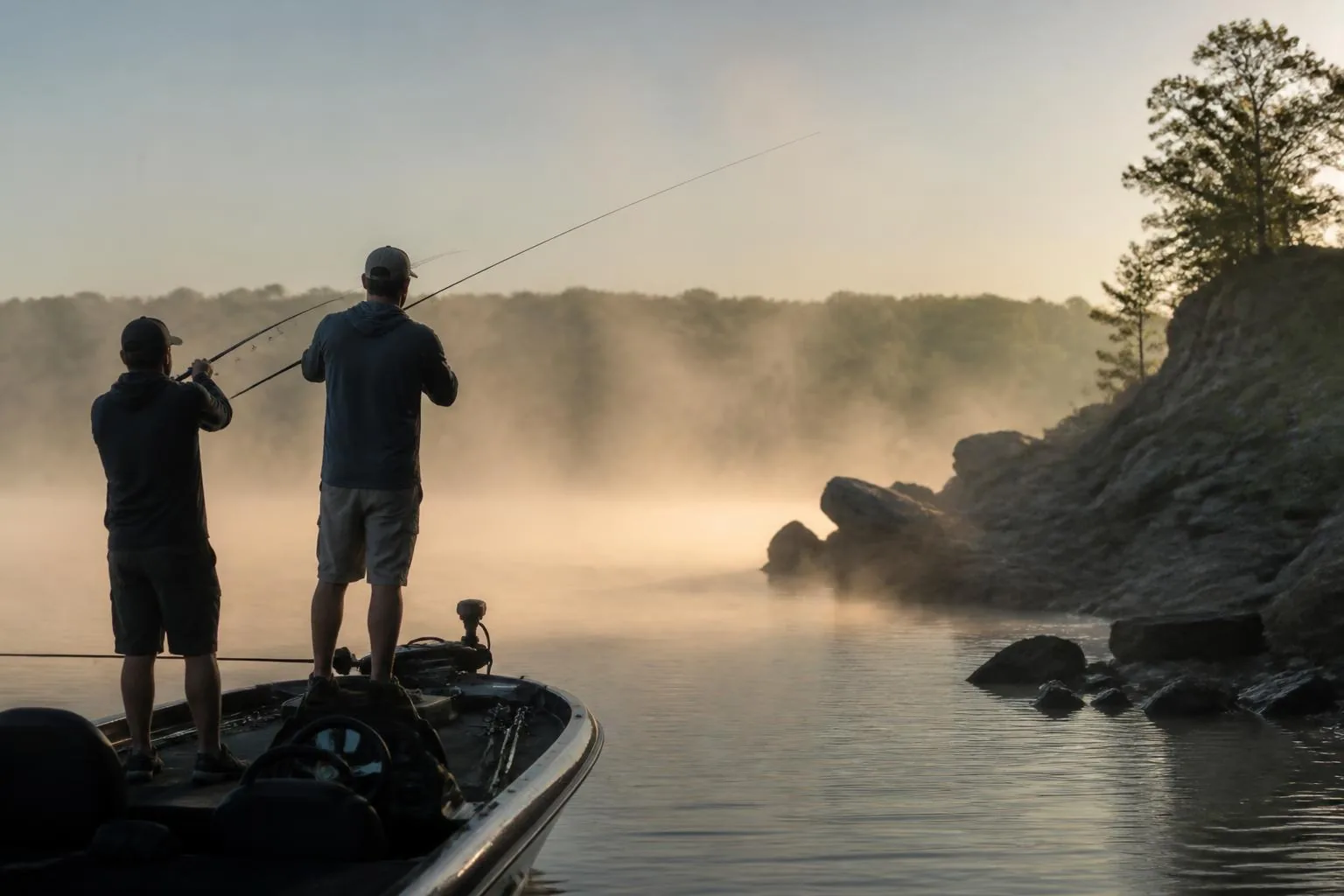
Fishing Lake Tillery
Run-of-river current, an old river channel, standing timber, and rock \u2014 Tillery fishes far bigger than its acreage suggests.
- Fishable water
- 5,260 acres
- Peak season
- Mar–May
- Headline species
- Bass & stripers
- Public ramps
- 3
Species
What's in the lake
Largemouth bass are the headline. The lake also holds striped and hybrid bass, blue and channel catfish, crappie, and white perch, along with the usual panfish. Current from upstream releases concentrates fish in predictable places, which is what regulars exploit.
Structure matters: the old Pee Dee channel, bridge pilings at the causeway, points where coves meet the main lake, and rocky banks near the dam.
- Largemouth bass — spring and fall best
- Striped and hybrid bass — channel and current
- Blue and channel catfish — year-round
- Crappie — spring around timber and docks
- White perch and panfish
Seasons
When to fish here
March through May is the strongest window, with bass moving shallow and crappie stacking on cover. Summer pushes fish deep and early — dawn and dusk on points and channel edges. Fall brings a second surge as water cools. Winter belongs to catfish and stripers along the channel.
A North Carolina fishing license is required and easily obtained online.
Current
Why hydropower sets the bite
Tillery is a run-of-river reservoir on the Pee Dee, fed by releases from Badin Lake above and drawn down by generation at Tillery Dam below. When water is moving, bait pins against structure and predators feed on the edges of it; when the lake goes slack in the middle of a hot afternoon, the same spots go quiet.
That makes timing more useful here than lure choice. Regulars watch for generation, fish the first hours of moving water, and shift from the main channel to protected coves when the lake flattens out. Level swings of a foot or two through the day also change how shallow cover fishes, which is worth checking before committing a morning to one flat.
- Moving water concentrates bait on channel edges and points
- Bridge pilings at the NC 24/27 causeway hold fish in current
- Slack afternoons favor shade, docks, and deeper timber
- Level changes of a foot or more alter shallow patterns
Water
Where to start on a lake you do not know
The upper lake above the causeway is narrow and river-like, with wood, laydowns, and current seams — the most productive water for anglers who like to fish structure and the quietest place to be on a summer weekend. The mid-lake section, from the causeway toward the larger coves, offers classic point-and-pocket fishing with more boat traffic.
The lower lake near Tillery Dam is deeper and rockier, and it is where stripers and big catfish hold through winter. Stay well clear of the dam face and tailrace, where currents are strong and access is restricted.
- Upper lake — river current, wood, and shallow structure
- Mid-lake — points, pockets, and standing timber
- Lower lake — rock, depth, stripers and blue catfish
- Old Pee Dee channel — the reference line for everything
Practicalities
Licenses, tournaments, and bank access
A North Carolina inland fishing license covers Lake Tillery and is available online from the NC Wildlife Resources Commission, including short-term options for visitors. State creel and size limits apply, and they are worth checking each season rather than assuming last year's numbers.
Swift Island Boat Landing is the tournament launch of record here, with roughly a hundred trailer spaces — expect a busy ramp on spring Saturdays. Bank fishing is possible but limited by private shoreline; the ramp areas, the causeway, and Morrow Mountain State Park are the reliable public options.
Questions
Frequently asked
Do I need a license to fish Lake Tillery?
Yes, a North Carolina inland fishing license is required for anyone 16 and older. Licenses are issued by the NC Wildlife Resources Commission and can be bought online, including short-term visitor options.
What is the best time of year to fish Lake Tillery?
Spring, roughly March through May, is the strongest overall window as bass move shallow and crappie stack on cover. Fall brings a second surge as water cools, and winter is the best striper and catfish season along the old river channel.
What fish are in Lake Tillery?
Largemouth bass, striped and hybrid bass, blue and channel catfish, crappie, white perch, bream and other panfish. Current from upstream hydropower releases concentrates baitfish and predators in predictable places.
Where do you launch to fish Lake Tillery?
Swift Island Boat Landing on NC 24/27 has the most trailer parking but a low bridge at the cove mouth; Lilly's Bridge gives direct access with no clearance issue. Bank anglers fish the causeway area and Morrow Mountain State Park shoreline.
Is Lake Tillery good for bass fishing?
Yes. Tillery fishes larger than its 5,260 acres because of river current, standing timber, and a defined channel — it regularly hosts club and regional bass tournaments out of Swift Island.
Can you fish from the bank at Lake Tillery?
Yes, though shoreline is mostly private. The practical public options are the ramp areas, the NC 24/27 causeway, and the Morrow Mountain State Park shoreline and fishing pier area.
Does the water level affect fishing on Lake Tillery?
It does. Tillery is a run-of-river reservoir, so generation at Tillery Dam and at Badin upstream changes current and level through the day. Moving water usually turns the bite on, especially for stripers and catfish near the channel.
Sources & references