Real Estate
Docks, lifts, and shoreline permits
The dock is the reason most people buy here. It is also the part of the property with the most rules attached.
Authority
Who has to say yes
Because Duke Energy operates the reservoir, shoreline structures fall under its shoreline management program. County requirements in Stanly or Montgomery layer on top, and in some cases federal or state agencies are involved for larger shoreline work. New docks, dock replacements, boathouses, retaining walls, dredging, and significant vegetation removal all generally require approval.
The process is manageable when it starts early. Problems arise when work is done first and permits are sought later — or when an unpermitted structure transfers at closing and the new owner inherits the issue.
- Duke Energy shoreline management approval
- County permitting (Stanly or Montgomery)
- Written confirmation of existing structures
- Vegetation and buffer restrictions
- Boathouse and covered slip limits
- Dredging requires separate review
Choosing
Dock types and what suits this lake
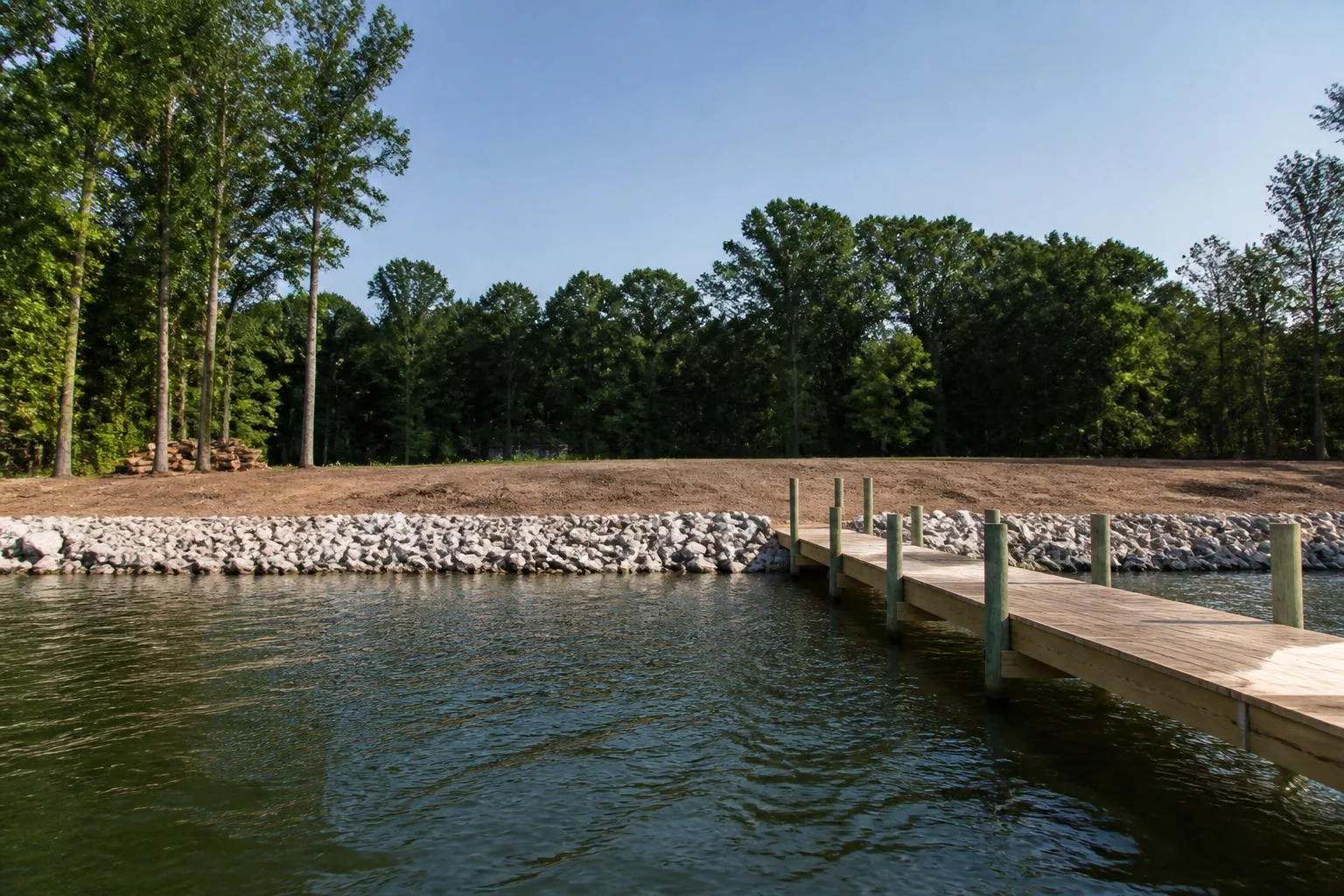
Floating docks handle fluctuating levels gracefully and dominate on run-of-river reservoirs like Tillery. Fixed docks work where depth is reliable and the shoreline is stable. Covered slips add shade and protection at the cost of view and permitting complexity.
Lifts are near-standard for anyone leaving a boat in the water. Add dock power, water, and lighting during construction — retrofitting a conduit run down a wooded slope is unpleasant work.
- Floating docks for level fluctuation
- Fixed docks where depth is reliable
- Covered slips for shade and protection
- Boat lifts and PWC ports
- Dock power, water, and lighting
- Weather-rated dock audio