Real Estate
Waterfront on Lake Tillery
The premium segment \u2014 and the one where a single site condition can make or break the purchase.
Practical guidance
Read the water with your intended boat in mind
A broad view does not establish usable boating depth. Discuss the boat’s draft, lift arrangement, and boarding needs before deciding whether a dock suits you. Record the observed lake level when depth is checked, and ask how the approach changes at lower operating levels. Lake Tillery’s full pond elevation is 278 feet; that reference is not a promise that water remains at one height throughout ownership.
Look beyond the end of the dock. The route out of a cove, turning room, underwater obstructions, and exposure during docking all affect daily use. A sheltered location may be comfortable for paddling yet require different expectations for a larger boat. Visit from the land and, when safely possible, from the water with someone familiar with the area.
Practical guidance
Keep shoreline rights separate from the view
A parcel touching the reservoir does not by itself establish approval for a particular dock design. Request the existing permit records, associated drawings, and correspondence about any modifications. Ask Duke Energy what review applies to a change in ownership or proposed work. Do not assume an older platform, lift, or shoreline wall can be enlarged simply because it is already there.
Have the survey and title review address boundaries, easements, and access routes. A visible path is not necessarily a recorded right, and landscaping is not a reliable property marker. If the purchase depends on a particular shoreline improvement, resolve its feasibility within the transaction’s agreed investigation period rather than leaving it as a post-closing design question.
Practical guidance
Design for the walk back from the lake
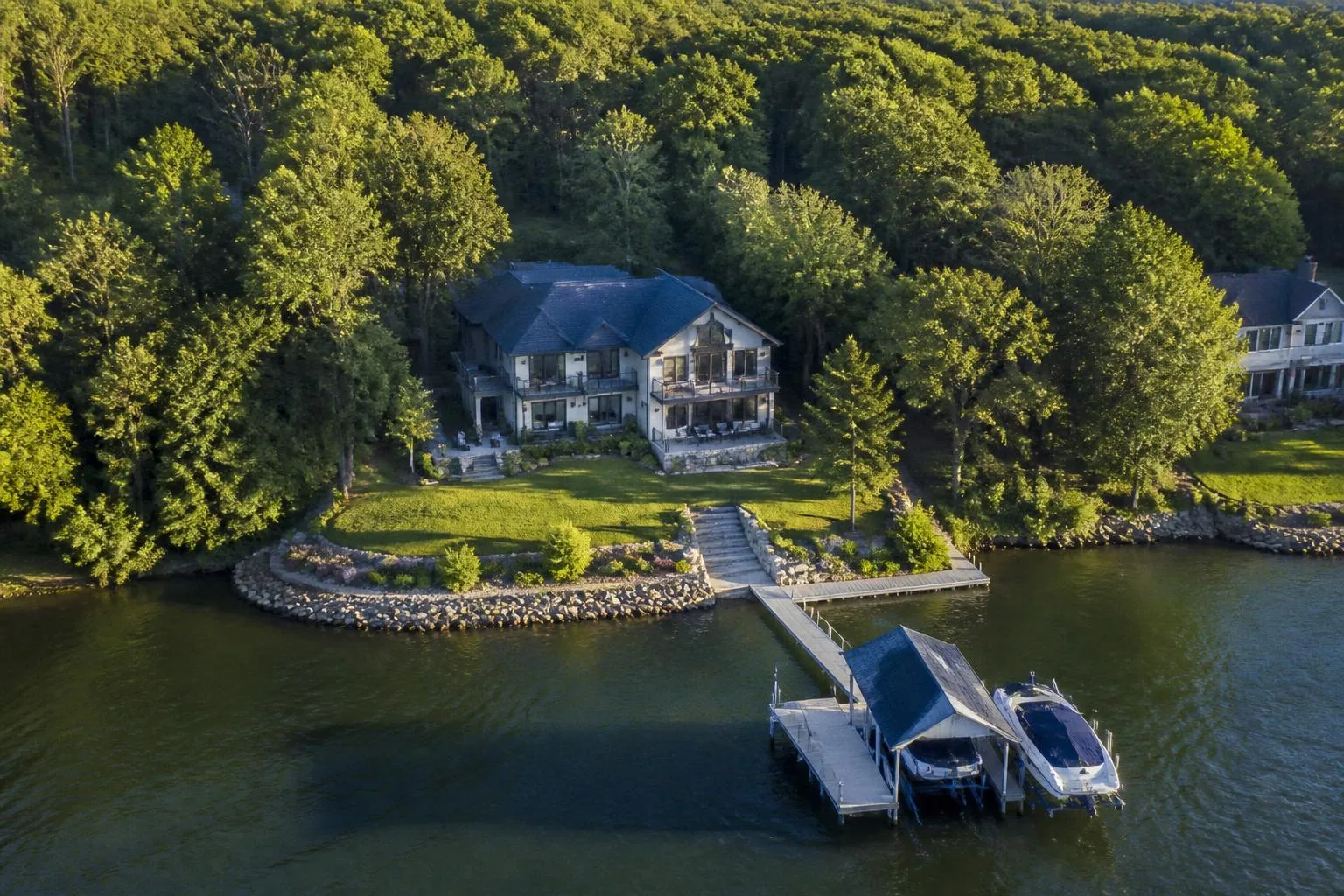
Much of the shoreline is steep, with slate and rock that can complicate excavation and drainage. Walk the house-to-dock route carrying the sort of gear you actually use. Count the transitions between steps, paths, gates, and decking. Think about young children, older guests, wet footwear, and how someone reaches the house after dusk.
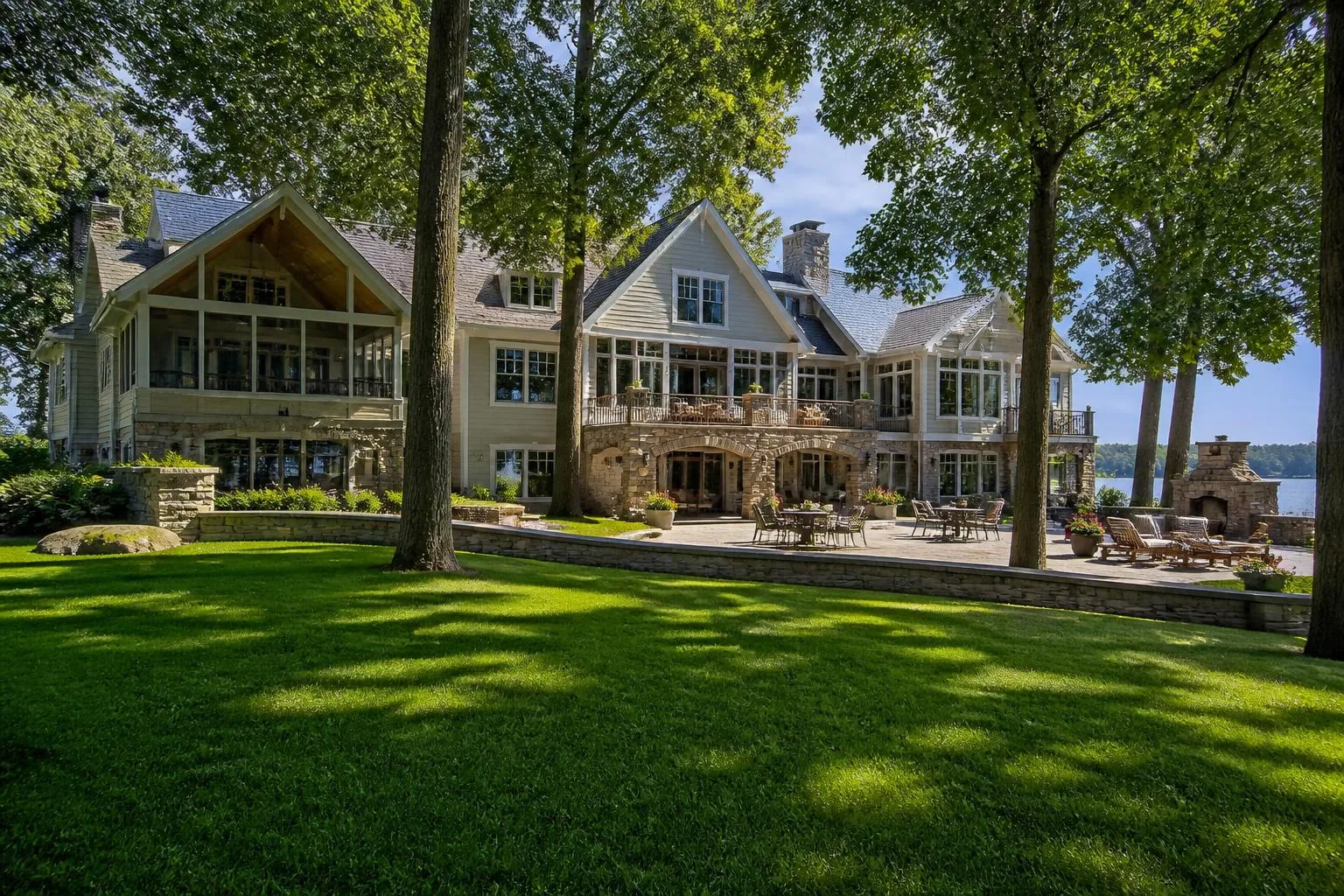
An inspection should also consider where roof and driveway runoff goes. Concentrated discharge can damage paths and shoreline areas even when the house itself remains dry. Ask qualified professionals to evaluate drainage and retaining structures before planning new terraces or access paths. The best waterfront arrangement feels simple because the difficult site questions have already been answered, not because they were overlooked.
Evaluating
Walk the shoreline, not just the house
Every serious waterfront evaluation on this lake starts at the water and works back. How deep is it at the end of the existing or proposed dock? Is the cove protected from prevailing summer wind and weekend wake? How far can you see, and does that view face private shoreline or permanently protected park land?
Then turn around. How steep is the walk from house to dock, and will that still be acceptable in twenty years? Is there a golf-cart path or does everything happen on foot? Where does stormwater go?
- Depth at the dock across the pool range
- Wind and wake exposure
- View length and what it faces
- Slope and access from house to water
- Shoreline stability and erosion history
- Existing dock condition and permit status
Rules
Duke Energy shoreline management and county permitting
Because Duke Energy manages the reservoir, structures within the shoreline zone — docks, boathouses, retaining walls, vegetation removal — are subject to its shoreline management program in addition to Stanly or Montgomery County requirements. Buyers should confirm that any existing structure is permitted and in good standing before closing.
This is routine when handled early and expensive when discovered late. Ask for permits in writing.
Ownership
What waterfront actually costs to keep
Beyond the purchase, waterfront ownership carries dock maintenance, lift service, seasonal cleaning, shoreline upkeep, and higher insurance considerations. None of it is exotic, but it should be budgeted rather than discovered.
Owners who use the lake heavily tend to spend more on the dock than on any other single item outside the house itself.