The Lake
Lake Tillery boat ramps and public access
Public access is spread along the length of the lake, from the state park peninsula to the causeway crossing and down toward the dam.
Access
The main public launches
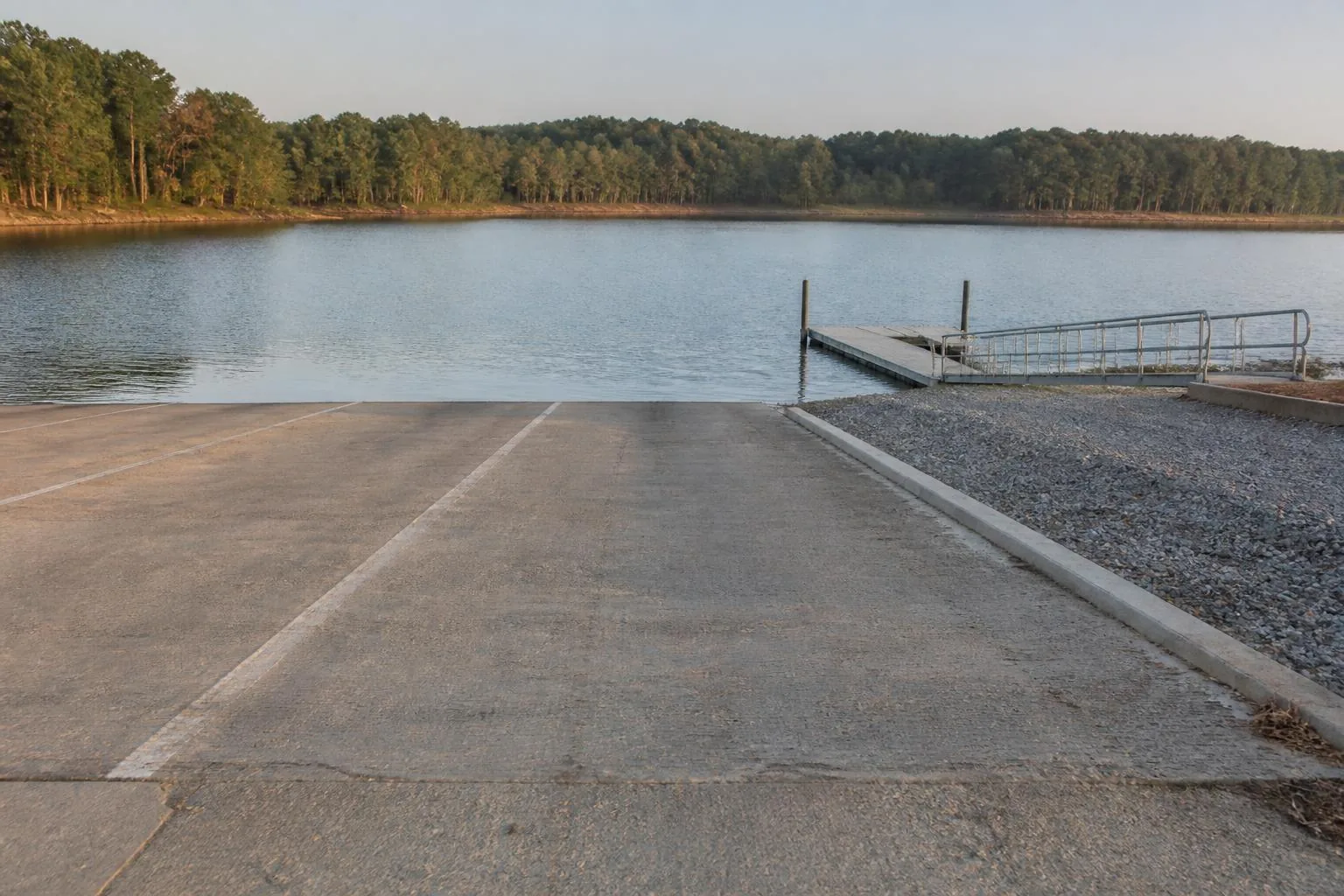
Lake Tillery's public access is a mix of state park facilities, wildlife access areas, and marina ramps. The state park ramp at Morrow Mountain is the best-known and the most convenient for the upper-middle lake; it also puts you closest to the quieter western shoreline and the park's own shoreline mileage.
The Swift Island area near the NC 24/27 causeway is the natural entry for the middle of the lake and for anyone approaching from the east. Northern access near Lilly's Bridge serves the narrow upper lake, which is where a lot of the serious fishing happens. Marina ramps fill in the rest and add fuel, service, and slip options.
- Morrow Mountain State Park ramp — western shore, park facilities
- Swift Island area — NC 24/27 causeway, central lake
- Lilly's Bridge area — upper lake, angler favorite
- Marina ramps — fuel, service, and slip rental
- Community launches — restricted to residents in many neighborhoods
Before you launch
Registration, licensing, and etiquette
North Carolina requires vessel registration through the Wildlife Resources Commission, and anyone fishing needs a current state fishing license. Both are handled online and take minutes. Boater education requirements apply to younger operators, so check current rules before handing over the wheel.
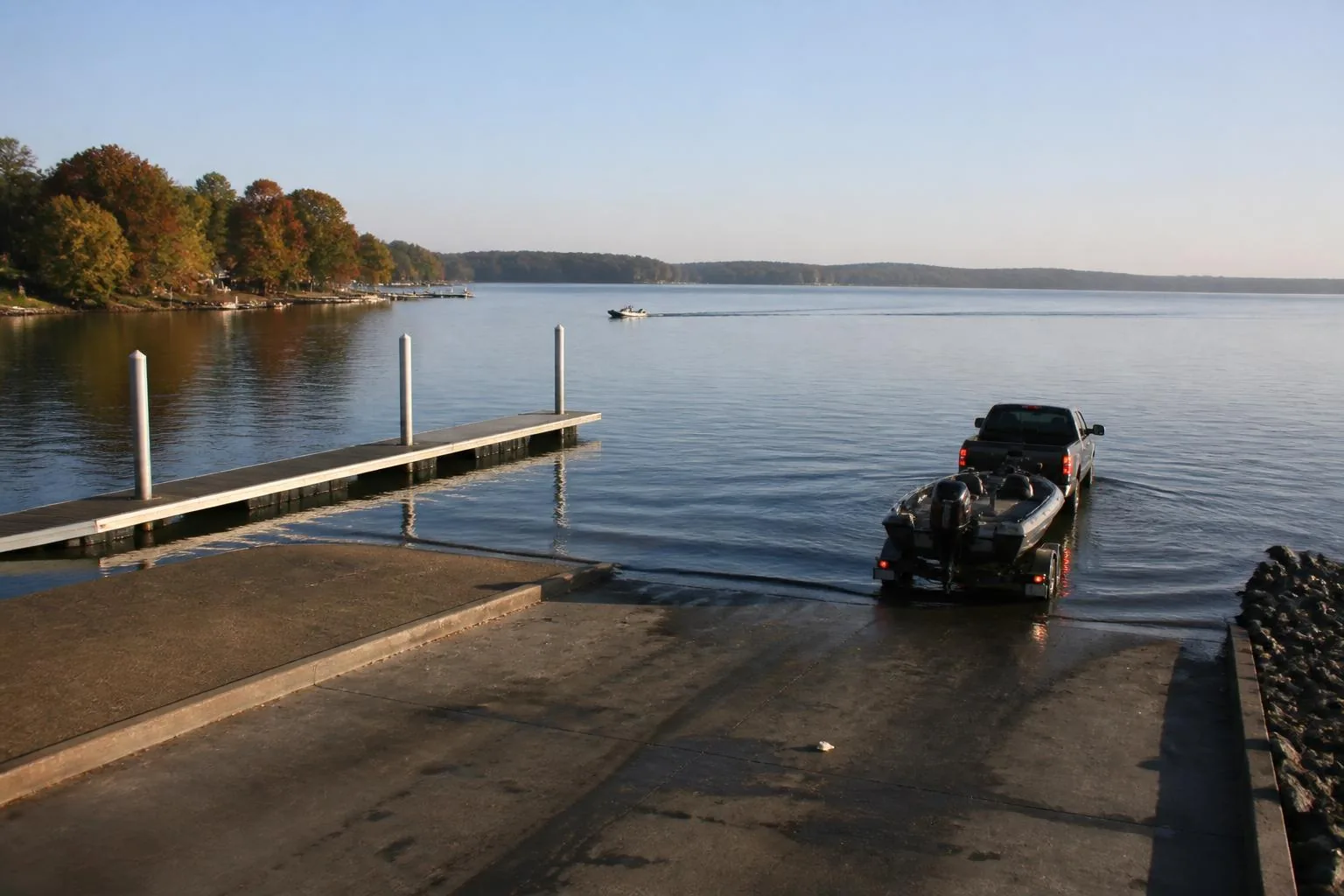
Ramp etiquette matters more here than on a big lake because the launches are smaller. Stage away from the ramp, load the boat before backing down, and keep the lane clear on summer mornings when a line forms fast.
- Vessel registration via NC Wildlife Resources Commission
- State fishing license required for anglers
- No-wake zones near ramps, marinas, and docks
- Watch for debris after heavy upstream rain
- Life jackets required for children under 13 while underway
Parking
Trailer parking and busy weekends
Trailer parking is finite at every access on the lake. On holiday weekends the state park and causeway lots fill early, and the practical answer is either an early launch or a weekday trip. Owners with private or community dockage rarely think about this; visitors should plan for it.
Ramp by ramp
Addresses, trailer counts, and the low-bridge warning
Swift Island Boat Landing
4917 NC Hwy 24/27, Mt. Gilead — the lake's largest public launch, paved lot with roughly 100 trailer spaces. A low bridge sits at the cove mouth: tall towers and Bimini tops must come down before passing under.
Public · NC 24/27Lilly's Bridge Cove Access
1097 Lilly's Bridge Rd, Mt. Gilead — NC Wildlife Resources Commission launch with about 50 trailer spaces. The right choice for wake towers, hardtops, and anything that will not clear the Swift Island bridge.
Public · NCWRCWebsiteMorrow Mountain State Park Ramp
Western shore inside the park, with a boathouse renting canoes and rowboats, bait, picnic areas, and the park's swim pool nearby. Gate hours change by season, so plan your return.
Public · Park hoursWebsiteNorwood-area shoreline access
South-end informal and community launch points serve owners below the NC 24/27 crossing; most are HOA- or marina-controlled rather than public.
Varies
Questions
Frequently asked
Are there public boat ramps on Lake Tillery?
Yes. Public access includes the Morrow Mountain State Park ramp on the western shore, access near the NC 24/27 Swift Island causeway, and northern access serving the upper lake, plus marina ramps.
Do I need a license to boat on Lake Tillery?
Vessels must be registered with the NC Wildlife Resources Commission, and anglers need a North Carolina fishing license. Boater education requirements apply to younger operators.
Is there a fee to launch?
Fees vary by access point. State park and marina facilities may charge; wildlife access areas are generally free but require valid vessel registration.
Sources & references