The Lake
Wildlife and water safety on Lake Tillery
The short answer first: no alligators. Here is what actually lives in and around this water, and the handful of safety rules that matter on a hydropower reservoir.
- Piedmont, not coastal plain
- No alligators
- Inland from the alligator range
- ~150 miles
- The daily shoreline birds
- Herons & ospreys
- Current near the dam
- Run-of-river
The question everyone asks
There are no alligators in Lake Tillery
American alligators do live in North Carolina, which is why the question comes up so often. Their established range sits in the coastal plain and the southeastern corner of the state — brackish creeks, blackwater rivers, and the swampy edges of the Cape Fear and Waccamaw basins. Lake Tillery is a Piedmont reservoir on the Pee Dee River roughly 150 miles inland, on the far side of the Uwharrie Mountains, with colder winters than alligators tolerate.
So swimmers, paddlers, and dog owners can relax on that point. What you should think about instead is current near the dam, boat traffic in the main channel, and the ordinary business of sharing a Southern lake with snakes and snapping turtles.
Snakes
Water snakes, copperheads, and how to tell the difference
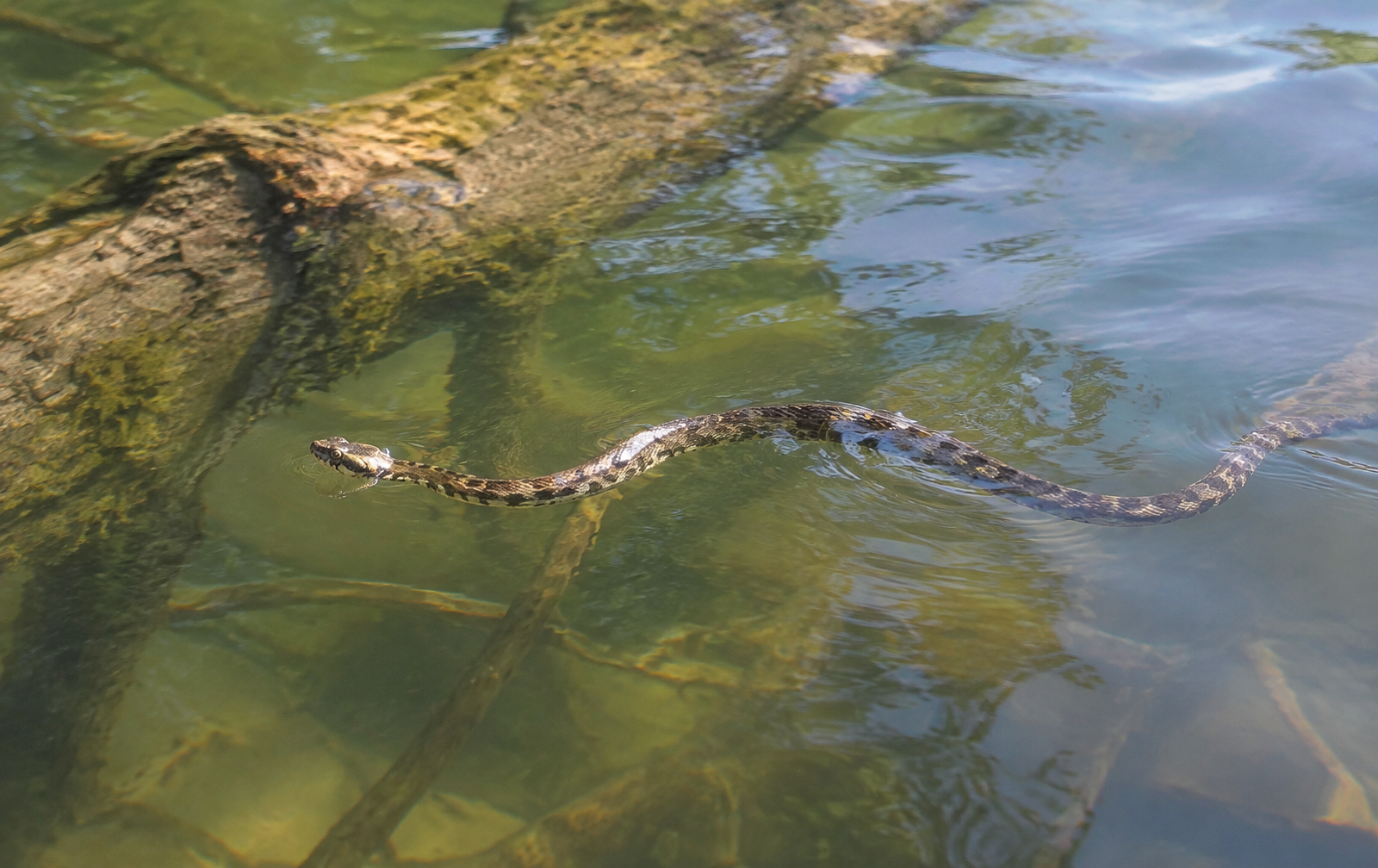
The snake you see swimming across a cove with its head above the surface is almost always a northern water snake — non-venomous, common, and quick to disappear when a boat approaches. Cottonmouths are a coastal species and are not established here, though the resemblance keeps the rumor alive.
The venomous snake that does live around the lake is the copperhead, and it lives on land: leaf litter, wood piles, rock walls, and the brushy edge between a lawn and the shoreline. Wear shoes on rocky banks, look before reaching under a dock frame, and keep dogs leashed on wooded trails in warm weather.
What you will see
The wildlife that makes the mornings worth it
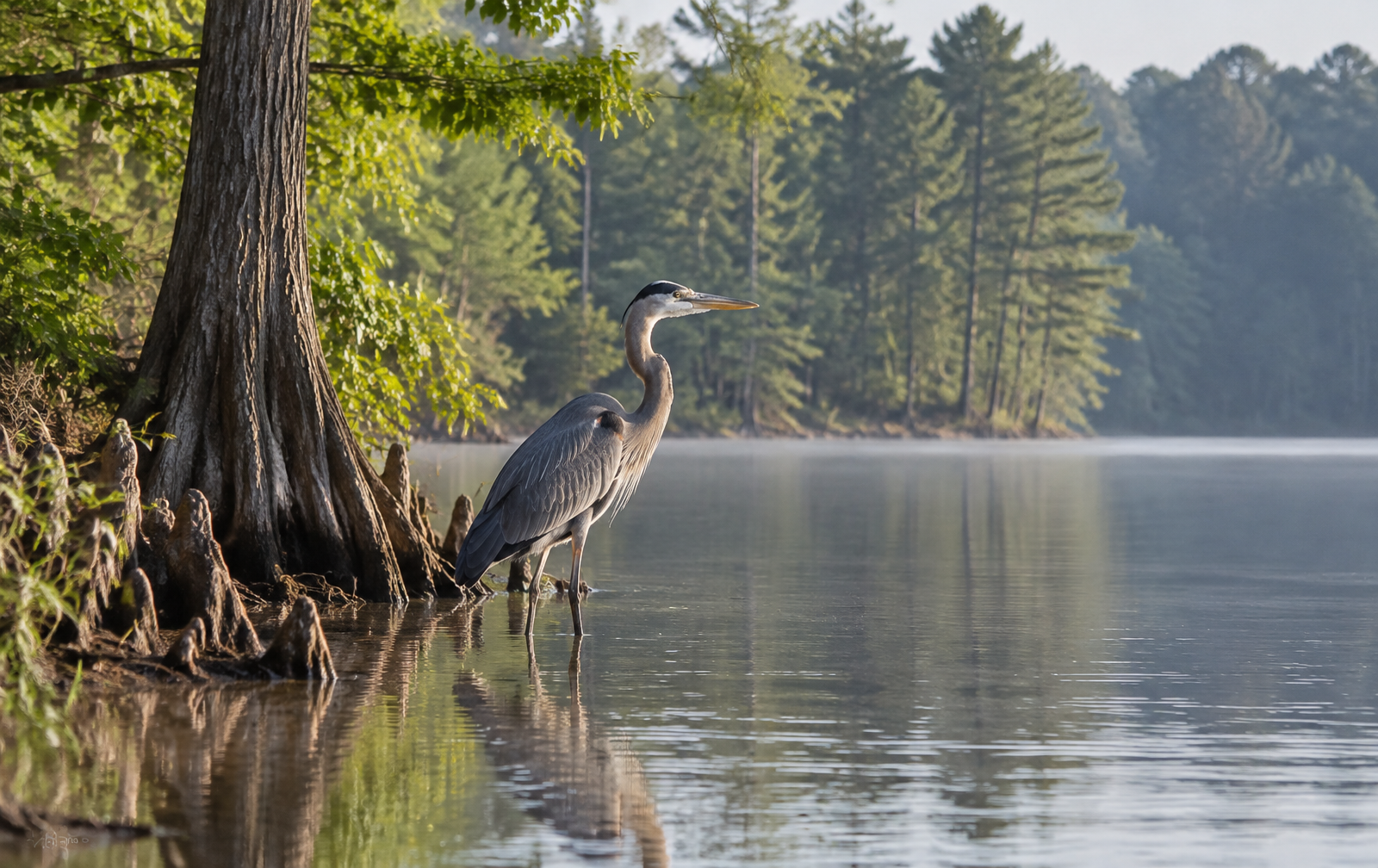
- Great blue herons and green herons hunting the shallows at first light
- Ospreys and bald eagles working the main channel, most visible spring through fall
- Belted kingfishers, wood ducks, and Canada geese in the creek arms
- Turtles stacked on every fallen log, plus snapping turtles in the shallows
- White-tailed deer, wild turkey, and the occasional beaver along quiet shoreline at dusk
- Largemouth and striped bass, catfish, crappie, and bream under the surface
Safety
The five rules that actually matter here
None of this is unusual for a Southeastern reservoir. It is simply the difference between a lake that feels safe and a lake that is.
- Stay well clear of the water immediately above and below Tillery Dam — flow changes with generation, without warning
- Swim from a dock or an anchored boat, not in the main channel where boat traffic runs
- Life jackets for children and weak swimmers, every time, including on a dock
- Get off the water at the first thunder; Piedmont storms build fast on summer afternoons
- Watch for submerged stumps and rock in the upper lake and at the mouths of coves, especially at lower pool
Questions
Frequently asked
Are there alligators in Lake Tillery?
No. American alligators in North Carolina live in the coastal plain and the southeastern corner of the state. Lake Tillery is a Piedmont reservoir roughly 150 miles inland, well outside the species' established range, and it has no alligator population.
Are there alligators anywhere in the North Carolina Piedmont?
There is no established Piedmont population. Isolated sightings of released or wandering animals are reported in North Carolina from time to time and are handled by the NC Wildlife Resources Commission, but they are not a feature of lakes in the Uwharrie region.
Are there snakes in Lake Tillery?
Yes, as in every freshwater lake in the Southeast. Most are harmless northern water snakes, which are frequently mistaken for cottonmouths. Copperheads live in the surrounding woods and shoreline brush. Give any snake distance, watch where you place hands and feet on rocky banks, and they will leave you alone.
Is Lake Tillery safe to swim in?
For confident swimmers using ordinary lake sense, yes. Swim from a dock or an anchored boat rather than near a channel, wear a life jacket if you are not a strong swimmer, keep clear of the areas immediately above and below Tillery Dam where generation changes flow, and stay out of the water during and after lightning.
What wildlife will I actually see on Lake Tillery?
Great blue herons and green herons working the shallows, ospreys and bald eagles overhead, kingfishers, wood ducks and Canada geese, turtles on every fallen log, white-tailed deer along the shoreline at dusk, and beavers in the quieter creek arms.
Do I need to worry about currents on Lake Tillery?
Only in specific places. Tillery is a run-of-river reservoir, so current picks up meaningfully near the dam, in the tailrace below it, and in the upper lake when there is generation upstream at Falls Dam. Duke Energy posts warnings at those areas; treat them as real.
Is Lake Tillery water clean?
It is a working river reservoir, so clarity moves with rainfall — clearer through dry stretches, stained after heavy rain carries sediment down the Pee Dee. Swimming is common all summer. Check current North Carolina recreational water advisories if conditions look unusual.
Keep exploring
Where to go next
Swimming in Lake Tillery
Where to swim and water temperatures.
Water levels and the dam
How generation moves the lake.
Fishing Lake Tillery
Species, seasons, and structure.
Boating on Lake Tillery
Ramps, routes, and etiquette.
Lake Tillery facts
Size, depth, shoreline, and history.
Weather by season
Water temperatures and storm patterns.